Skip to content

Stress and burnout complaints

Room to catch your breath.

When you are mentally overloaded, your mind rarely stands still. An immersive VR experience can offer a moment in which everyday stimuli fade into the background, as a complement to broader recovery efforts.
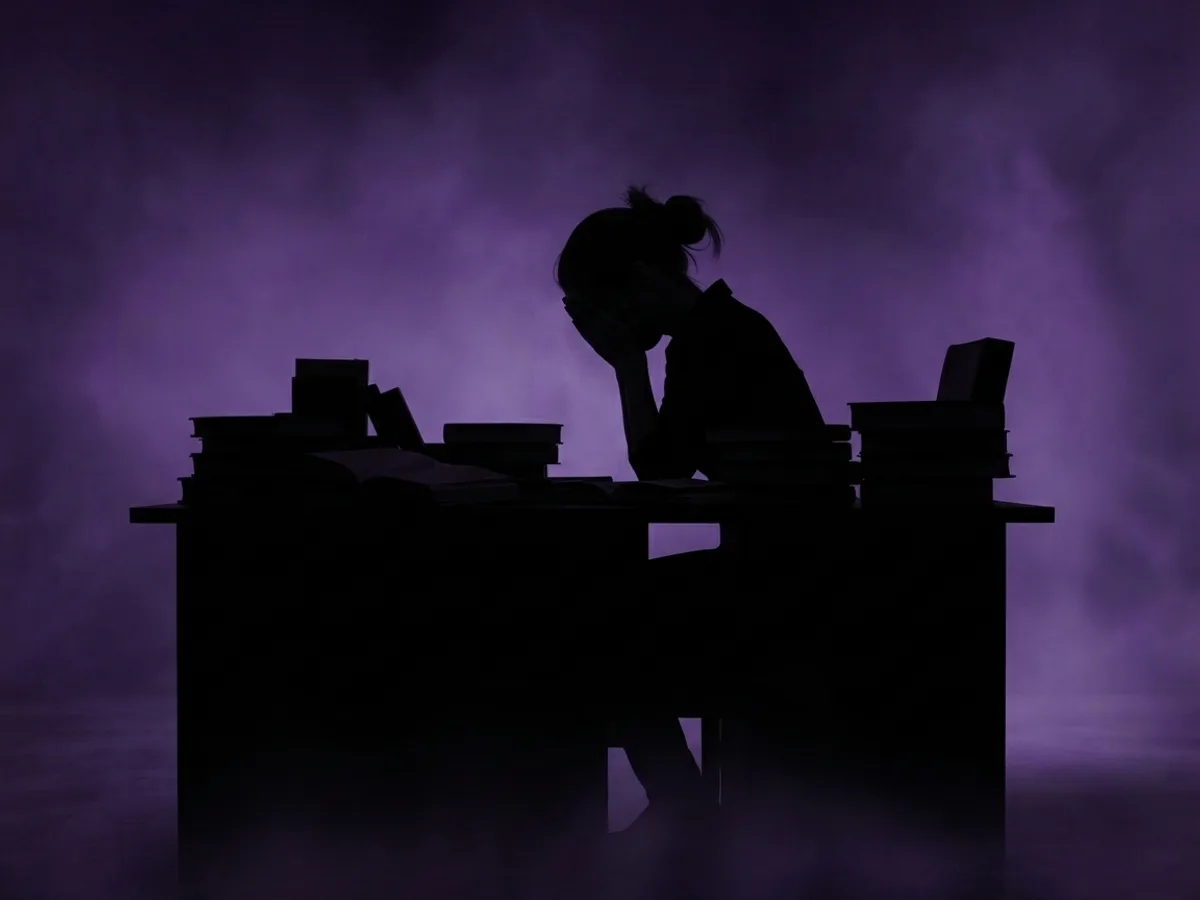
Silhouette of a tired person resting their head in their hand at a desk full of piles of paper

Recovery takes more than rest alone

Burnout complaints usually arise from prolonged overload. Recovery takes time, good support and often changes in work and environment. A short VR experience does not replace that.

What VR can offer is a defined moment in which attention shifts: away from tasks and notifications, towards a calm environment with images, sound and guided reflection. For some people, that can help to recognise tension and release it consciously.

We are developing this application for use within programmes under professional supervision, such as with an occupational health service, company doctor or healthcare professional.

How it works

From getting acquainted to a moment for yourself.

This is roughly what use within an organisation looks like. We agree the exact details together.
  1. 1

    Getting acquainted

    We discuss goal, audience and setting, and show the experience during a demo.

  2. 2

    Headset on

    The participant puts on the headset, preferably seated, with support where appropriate.

  3. 3

    The moment itself

    A dream world with image, sound and guided reflection, at your own pace.

  4. 4

    Coming back

    Wrapping up calmly and, where appropriate, talking it through with a supervisor.

In detail: how and for whom?

Possible applications

Where it can fit.

Examples of how organisations could use this application. Not every application is available straight away; we discuss together what is feasible.
  • Alongside support

    As a supporting moment within a support programme, agreed with the professional.

  • Unwinding and recognising

    A structured break that can help people notice tension and relax consciously.

  • Return to work

    As an accessible part of returning to work, in consultation with those involved.

  • Bespoke

    For specific audiences or protocols, we can adapt worlds, storyline and interaction.

Scientific background

What research shows, and what it does not yet show.

Several studies among healthcare professionals and other high-pressure occupations show indications that VR relaxation and VR mindfulness can reduce stress. Most are small studies, often without a control group.
  • Randomised study51 healthcare professionals

    Soh et al. (2021)

    Compared mindfulness exercises delivered as audio only and in a VR environment. Participants reported less mood disturbance with VR (when VR was offered after audio) and said they felt more engaged with VR.

    An indication that the visual, immersive layer can add something to existing relaxation exercises.

    View the publication(opens in a new tab)


  • Pilot study (before and after)90 healthcare professionals, 83 completed the programme

    Ferrer Costa et al. (2024)

    Eight weekly VR sessions of 10–13 minutes focused on mindfulness and emotion management. The researchers report improvements on burnout and work engagement scales (MBI and UWES).

    A first indication for VR within a recurring programme. Without a control group, so provisional.

    View the publication(opens in a new tab)

  • Feasibility study20 mental health staff

    Williams et al. (2024)

    Examined VR relaxation for staff in complex care settings. After the sessions, participants reported better wellbeing and less psychological distress; the approach proved feasible and acceptable.

    An indication that VR relaxation can also fit into busy work environments.

    View the publication(opens in a new tab)
  • Controlled studyAdults

    Villani & Riva (2012)

    Tested a stress management protocol delivered via VR, video and audio. All three formats helped with stress management; the VR version showed the largest psychophysiological improvements.

    An early study of VR as a vehicle for guided relaxation and imagery exercises.

    View the publication(opens in a new tab)

About the evidence for Dream Fiction itself

These results concern VR interventions in general. They do not show that the Dream Fiction experience itself is effective for burnout. Product-specific research has not yet been carried out.

All sources and background

Limits

Honest about what VR cannot do.

  • VR does not cure burnout and does not replace treatment or a recovery period.
  • With severe exhaustion, extra stimuli can actually be a burden; agree on use with a professional.
  • The evidence for VR in burnout is still limited and based on smaller studies.
  • Work-related causes need to be addressed in the work environment itself.

For whom

For organisations that take mental wellbeing seriously.

We work with organisations and professionals who support people with their mental wellbeing. Together we explore where an immersive experience can add value.
  • Occupational health services

    Explore how VR can complement existing support and wellbeing initiatives, for example around stress and prevention.

  • HR and employers

    Discover possible applications for employee wellbeing, stress awareness and prevention within your wellbeing policy.

  • Youth wellbeing

    Accessible, appealing experiences that can invite young people to take a moment of calm and reflection.

  • Healthcare professionals

    Get to know our approach and explore opportunities for responsible collaboration and research.

  • Organisations with specific needs

    Discuss bespoke solutions, demonstrations and requirements around privacy, safety and implementation.

  • Do you recognise your organisation?

    We are happy to think along about your audience, the application and the practical requirements.

Questions

Frequently asked questions about burnout.

All frequently asked questions

Can someone with burnout complaints use the experience on their own?

With burnout complaints, we recommend using the experience in consultation with a company doctor, occupational health service or healthcare professional, so that it suits the stage of recovery.

What if someone does not feel well during the experience?

Stop straight away, take off the headset and take your time. A supervisor can help to talk about how you feel. Not every experience suits everyone.

Can you fit in with our existing protocol?

We are happy to discuss your requirements for support, privacy and safety. We do not promise in advance that we meet every protocol, but we will explore together what is possible.

Free on-site demo

Explore VR as a complement to your support.

During a free on-site demo, see how the experience works and discuss together whether and how it fits your approach.